The British Association for Islamic Studies (BRAIS) is delighted to announce the outcome of the 2026 BRAIS Prize in the Study of Islam and the Muslim World. The winner of the 2026 Prize is:
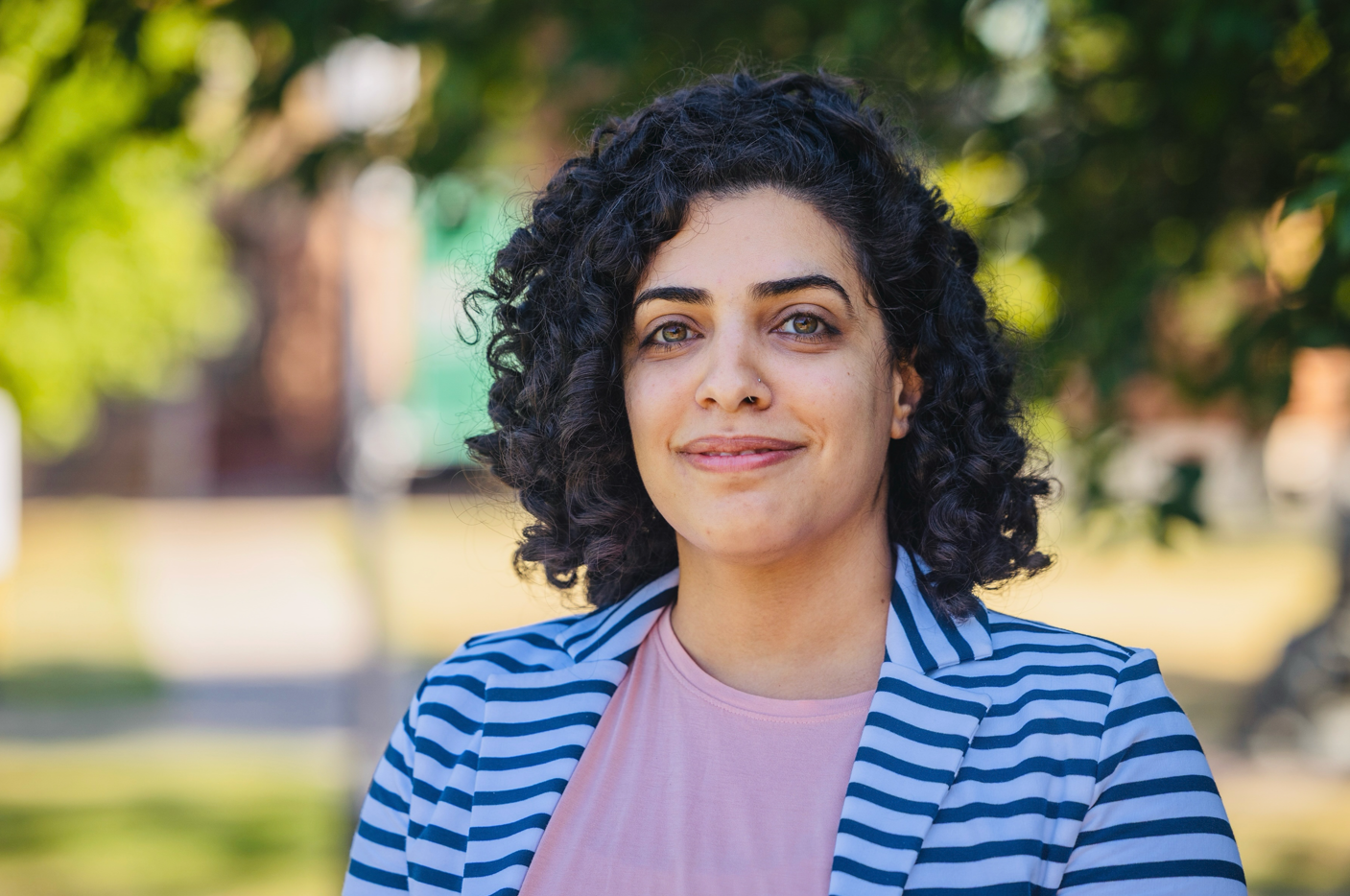
Dr Alaa Murad
Brandeis University
Ottoman Belonging in Novel Form: Jurjī Zaydān’s History of Islam Series (1891–1914)
This year we received a large number of exceptionally high-quality submissions, and we therefore offer our most sincere congratulations to Dr Murad for winning the BRAIS Prize in such a competitive year.
Thesis Summary
The doctoral thesis titled “Ottoman Belonging in Novel Form: Jurji Zaydan’s History of Islam Series (1891–1914)” is an historical study of the rendering of Islamic history in novel form and its implications. The thesis examines the Arabic historical novels of the Ottoman Syrian man of lettres Jurji Zaydan, which were serialized in his popular periodical al-Hilal and ignited public debates around the writing, adaptation, and popularization of history. Through al-Hilal, Zaydan, a Syrian émigré in Cairo from an Orthodox Christian background, made a name for himself as a writer, editor, historian, and man of letters. This thesis investigates the role of the novel series as didactic spaces through which Zaydan and his contemporaries negotiated Ottoman sociopolitical boundaries on the eve of the First World War.
This historical study of the novels combines the history and literature of the nahḍa with Islamic thought, Arabic and Islamic historiography, and the history of interreligious relations in the late Ottoman Empire and the modern Middle East. In this context, the novels act as an historical archive, not of the histories they recount, but of the period’s boundaries around religious difference and popular Ottoman ideas on belonging. This study illustrates how the novels participated in the modern invention and reimagining of Islamic history, the place of nonMuslims within its trajectory, and the collective struggle for Ottoman equality. Through discourse analysis of archival material, including letters, diaries, and periodical articles, and the study of classical and medieval Islamic texts employed by Zaydan in the novels, this thesis reevaluates the intellectual economy that shaped religious, national, and imperial belonging at the turn of the twentieth century. I argue that, through narrative and serialization, the novels harnessed the past to redefine Islamic history and thought to contest new and existing sociopolitical boundaries around religion and imperial belonging in the Ottoman Empire.
The thesis has three main scholarly contributions. First, it builds on the expanding field of nahḍa studies by showing that Zaydan’s popular novels, often ignored and trivialized in scholarship, constituted an explicit historiographical project. The thesis concludes that further scholarship into the larger genre of historical fiction can yield valuable insights into other intellectual projects in late Ottoman and post-Ottoman Arab(ic) spaces. More specifically, those novels within the genre that use sacred history or leverage religious rhetoric can further our understanding of intra- and interreligious dynamics.
Second, the thesis contributes to the understanding of modern appropriations of classical and medieval Islamic texts. The thesis offers new insights into the role of classical and medieval texts in the modern Arabo-Ottoman world through a textual analysis of their use in modern storytelling and the debates surrounding their interpretation and adaptation. The thesis investigates how authors assigned new meanings and roles to these texts by transforming them to fit the form of the modern Arabic novel.
Third, the thesis contributes to the understanding of interreligious intellectual and social life. It does so by showing how non-Muslims like Zaydan not only actively engaged with their interlocutors of diverse religious, ethnic, and national backgrounds but also participated in discourses that reshaped a modernizing Islamic tradition and society. Thus, the thesis shifts the conversation away from the treatment of non-Muslims in Islamic intellectual traditions and instead asks: how did Ottomans of diverse backgrounds and religious affiliations negotiate the rapidly changing discourses around the production of knowledge defined or claimed as Islamic, and to what end?
Honorable Mention
Given the standard of this year's submissions, the BRAIS Prize Committee has also awarded an Honorable Mention to a second scholar whose work was considered to be of a particularly high quality:
Dr Yasmin Ismail
Freie Universität Berlin
The Anglophone Maktab: an ethnographic study of language, religious education and identity in minority Muslim communities
BRAIS would like to thank everyone who submitted a manuscript for this year's Prize and all those who provided references for applicants. We would also like to offer our profound thanks to the many reviewers across the world who gave of their time so generously, and to our Prize Committee who had the very difficult task of selecting our winner. Particular thanks also to Prize Chair, Dr Saeko Yazaki, and Prize Coordinator, Uzair Ibrahim, for their essential work in overseeing the Prize in all its complexity.
The 2027 BRAIS Prize in the Study of Islam and the Muslim World is now open for submissions. Learn more by CLICKING HERE.